

On behalf of the College of Computing, it is my great pleasure to welcome our students, faculty members, partners, and guests. We are delighted to have you join us as we continue our commitment to academic excellence, innovation, and transformative education in the field of computing.
The College of Computing stands at the forefront of technological advancement, dedicated to nurturing competent, ethical, and socially responsible computing professionals. As technology continues to shape industries, communities, and everyday life, we remain steadfast in our mission to equip our learners with strong technical foundations, critical thinking skills, and a passion for lifelong learning.
To our students, you are entering a dynamic and challenging discipline—one that demands creativity, resilience, and collaboration. We encourage you to take full advantage of the opportunities offered by the college, engage in research and innovation, and actively participate in academic and community-based initiatives.
To our faculty and partners, your expertise, dedication, and continued support are vital in shaping the future of computing education. Together, we can foster an environment that promotes discovery, inclusivity, and meaningful societal impact.
Once again, welcome to the College of Computing. May this endeavor be enriching, productive, and inspiring for all.
Thank you, and I wish everyone a successful and fulfilling journey ahead.
Dr. Christine Lourrine S. Tablatin
Dean, College of Computing

Welcome to the IT Department!
Mr. David Kearns said, “In the race for quality, there is no finish line.” We also never stop improving our operations and achieving quality and excellence. We firmly believe that it is proper to give back to our clients and stakeholders the best. Accreditation of the BSIT program is an avenue to realize this objective. We have prepared our report documenting our passion, processes, and results for quality in service delivery. Undoubtedly, your insights, time, and expertise during this accreditation can surely help us see what we are now and further what we can be in the future.
Thank you very much and may you have a pleasant virtual stay with us.
Dr. Caren A. Pacol
Chair, Information Technology Department
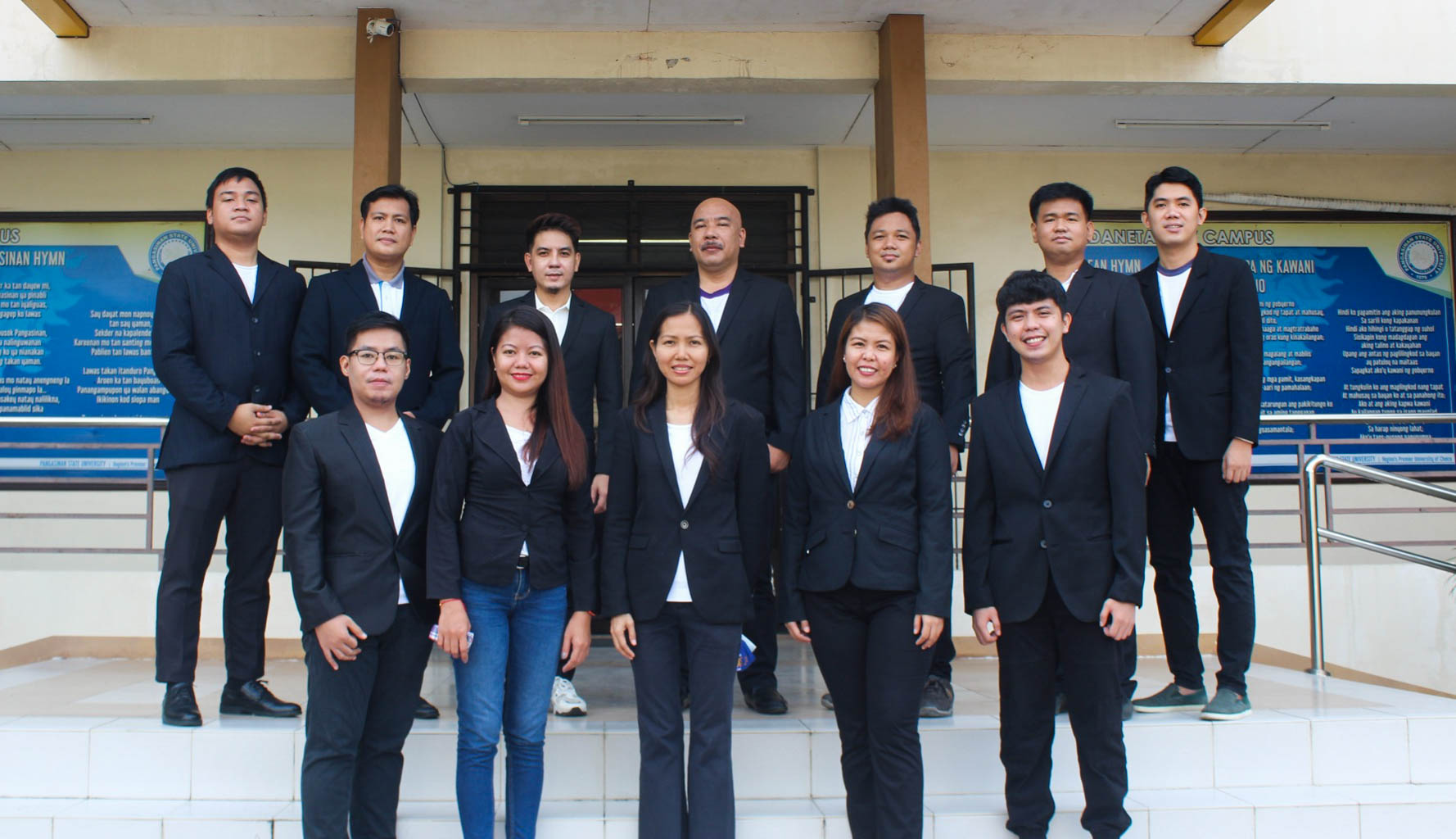
The Bachelor of Science in Information Technology (BSIT) Program of Pangasinan State University – Urdaneta Campus, with majors in Web and Mobile Technologies and Data Analytics, is one of the top producers of quality IT graduates in the region. The program consistently adheres to the standards set by the Commission on Higher Education (CHED) and continuously updates its curriculum to respond to the rapidly evolving demands of the information technology industry.
Since its inception in 1998, the BSIT program has remained one of the most sought-after degree programs in the University. Enrollment has steadily increased year after year, reflecting the growing relevance of information technology in a globalized world. As digital transformation accelerates across industries, the demand for competent and skilled IT graduates continues to rise.
Driven by its commitment to serve stakeholders through quality education, the IT Department has undergone various accreditation processes to ensure excellence in its four-fold functions: instruction, research, extension, and production. The pursuit of academic excellence remains a lifelong commitment of the department.
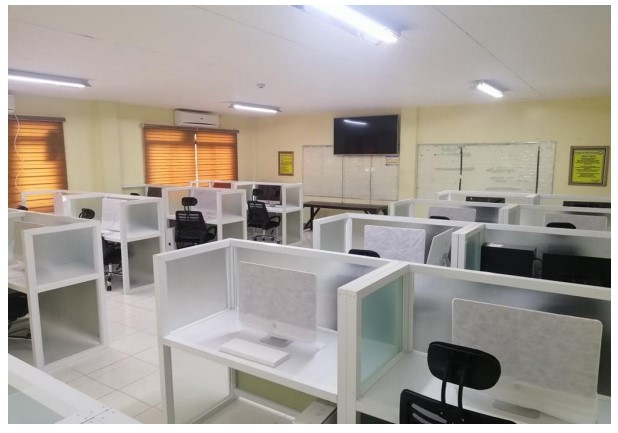
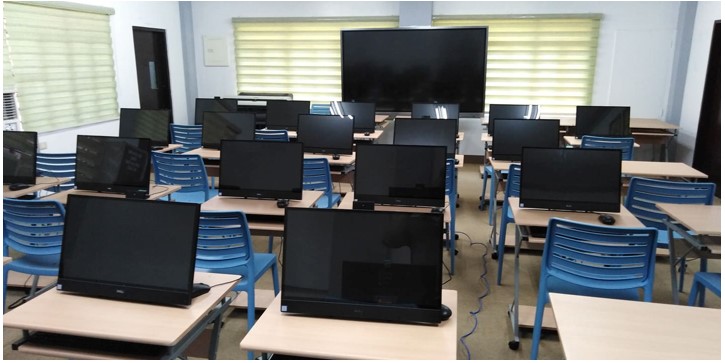
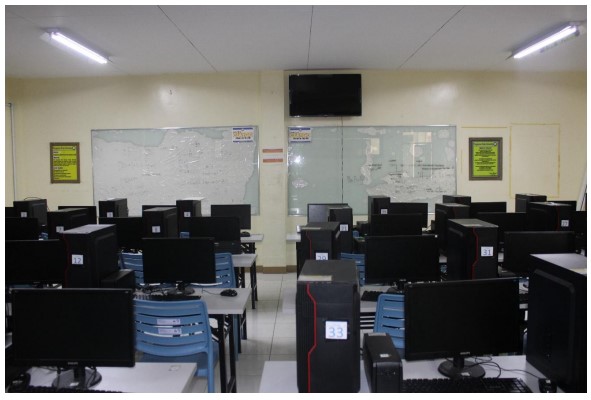
In the face of increasing challenges in delivering higher education, the IT Department remains proactive and adaptive. With the strong support of the present PSU administration, the department has acquired modern laboratory facilities and equipment that provide students with hands-on, industry-relevant training. These resources are designed to equip graduates with the technical competencies and practical skills necessary to succeed in the competitive job market.
The strength of the IT Department lies in its dedicated and highly committed faculty members, who continuously work to support the University’s vision of becoming a leading State University in the ASEAN region. Even during the global pandemic, which greatly disrupted educational institutions worldwide, the IT faculty remained steadfast in delivering quality instruction through innovative and flexible learning approaches.
Today, the IT Department is more committed than ever to providing relevant, responsive, and future-ready education. It continues to uphold its mission of shaping competent IT professionals who entrust their future to Pangasinan State University.
Accreditation Status: AACCUP LEVEL III Re-accredited
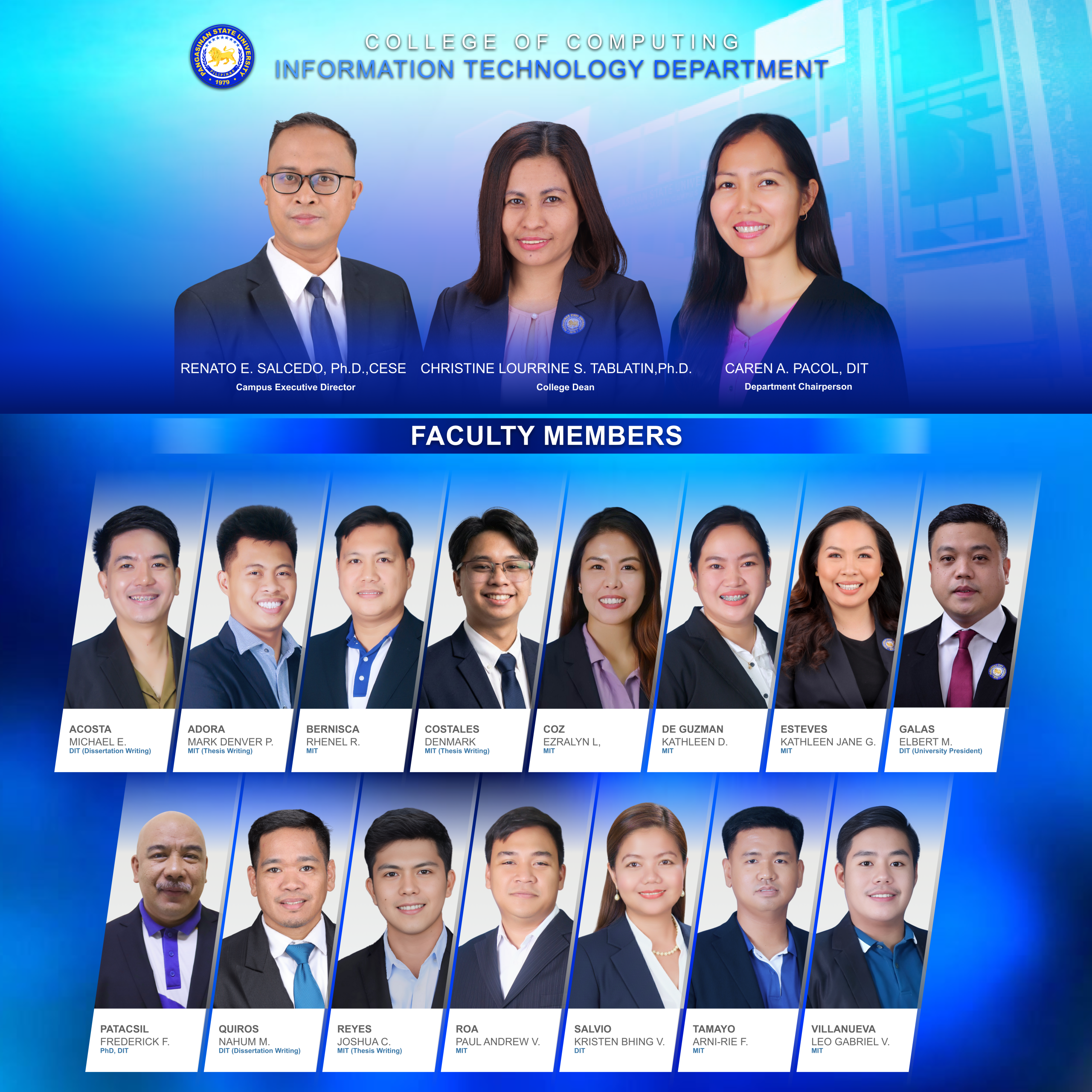
Organizational Chart
EMPLOYMENT OPPORTUNITIES
- Application Developer
- Database Administrator
- Digital Animator
- Information Security Administrator
- Multimedia Technologist
- Network Administrator
- Network Engineer
- Systems Analyst
- Test Engineer
- Web Administrator/ Web Master
- Web Developer
The intent of the Information Technology program is to produce graduates who are able to meet the demands of the IT professional in the industry, both local and national area and in the ASEAN region. It has the following objectives:
-
- Undertake projects that show ability to solve complex problems and to work in teams on problems whose solutions lead to significant societal benefits.
- Communicate effectively with diverse stakeholders as well as function appropriately in a team environment.
- Demonstrate ethical behavior as an IT professional and sensitivity to the impact of technology and society.
- Engage in lifelong learning and professional development.
- 1. Demonstrate professional competence in the IT field through continuous professional development and build internationally recognized expertise
- 2. Exhibit leadership and strategic planning skills to drive positive transformations across diverse environments.
- 3. Engage in community service and contribute to societal well-being through the ethical and responsible application of information technology and promoting digital inclusivity.
|
GRADUATE ATTRIBUTES |
PROGRAM ATTRIBUTES |
PROGRAM OUTCOMES |
|
Knowledgeable and Skilled IT Professional |
Knowledge for solving computing problems |
1. Apply knowledge of computing science, and mathematics to address real problems appropriate to the discipline |
|
2. Distinguish best practices and standards and their applications |
||
|
Program Analysis |
3. Analyze complex problems, and identify and define the computing requirements appropriate to its solution |
|
|
4. Identify and analyze user needs and take them into account in the selection, creation, evaluation and administration of computer-based systems |
||
|
Design, development of solutions |
5. Design, implement, and evaluate computer-based systems, processes, components, or programs to meet desired needs and requirements under various constraints |
|
|
6. Integrate IT-based solutions into the user environment effectively |
||
|
Modern Tool Usage |
7. Apply knowledge through the use of current techniques, skills, tools and practices necessary for the IT profession |
|
|
People’s Champion |
Individual and Team Work |
8. Function effectively as a member or leader of a development team recognizing the different roles within a team to accomplish a common goal |
|
9. Assist in the creation of an effective IT project plan |
||
|
Knowledgeable and Skilled Communicator |
Communication |
10. Communicate effectively with the computing community and with society at large about complex computing activities through logical writing, presentations, and clear instructions |
|
Community Developer |
Computing Professionalism and Social Responsibility |
11. Analyze the local and global impact of computing and information technology on individuals, organizations, and society |
|
12. Understand professional, ethical, legal, security and social issues and responsibilities in the utilization of information technology |
||
|
Continuous-Innovative Learner |
Life-long Learning |
13. Recognize the need for and engage in planning self-learning and improving performance as a foundation for continuing professional development |
- Develop the students’ competencies by instilling the latest IT knowledge and skills.
- Develop and enrich the IT education curriculum that is flexible and adaptable to meet the needs of students and the IT industry.
- Promote students’ holistic development to improve their skills and abilities.
- Expand and establish network of linkages with other institutions both private and public to strengthen academe-industry support.
- Establish instruction-related support systems.
Events and Activities
Proud Moments: ITSO Incredible How Our PSU IT Olympians Gave Their All!
From PSU Urdaneta all the way to UMak, our delegates backed by the unwavering support of their coaches showcased logic, creativity, and true tech mastery at the 14th IT Skills Olympics with the theme “Securing the Human-Centric Technology: Forging a Resilient Digital...
PSU Outreach Program in Happy Sun Center Orphanage Vietnam
In the afternoon, the group proceeded to the Happy Sun Center Orphanage, where they successfully carried out an Outreach Program aimed at providing both educational enrichment and recreational engagement for the resident children. The activity was jointly organized...
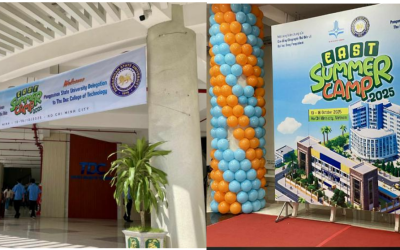
EAST SUMMER CAMP 2025 Thu Duc College of Technology, Ho Chi Minh City, Vietnam
The Pangasinan State University (PSU) delegation participated in the EAST Summer Camp 2025 held at Thu Duc College of Technology (TDC) in Ho Chi Minh City, Vietnam, from October 10 to 16, 2025. The week-long international engagement served as a dynamic platform for...
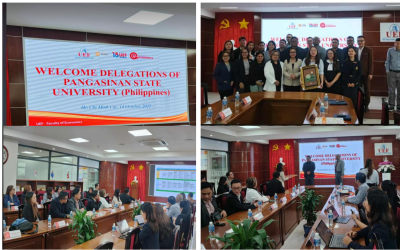
Pangasinan State University (PSU) delegation visited the University of Economics and Finance (UEF) in Ho Chi Minh City, Vietnam
On this date, the delegation from Pangasinan State University (PSU) conducted an institutional benchmarking visit to the University of Economics and Finance (UEF) in Ho Chi Minh City, Vietnam. The visit formed part of PSU’s ongoing efforts to strengthen its...
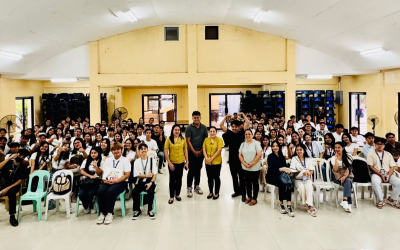
Pre-OJT/Internship Seminar and Orientation Program
The Pangasinan State University, Urdaneta City Campus, successfully conducted its Pre-OJT/Internship Seminar and Orientation Program on January 20, 2025, at the SAC Building. This event aimed to equip student interns with the necessary knowledge, skills, and values to...
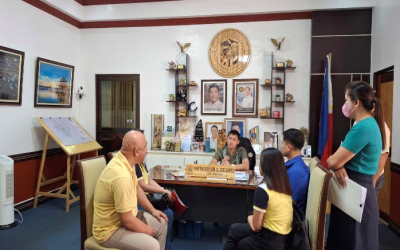
Meeting on Smart Tourism Enhancement project in Alaminos City, Pangasinan
The College of Computing headed by Dr. Frederick F. Patacsil convened with the Local Government Unit of Alaminos City last October 15, 2024 to discuss the project proposal for the Smart Tourism Enhancement in Hundred Island National Park. This initiative aims to...
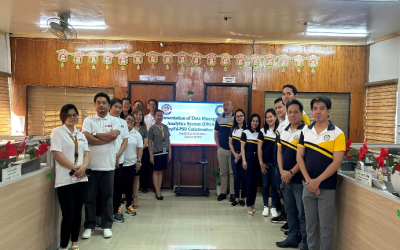
Presentation of Data Management Analytics System for DEPED RO1
On October 14, 2024, a presentation was held at the Department of Education (DepEd) Region I office in San Fernando, La Union, to showcase the newly developed Data Management Analytics System. This system aims to enhance data collection, analysis, and reporting within...
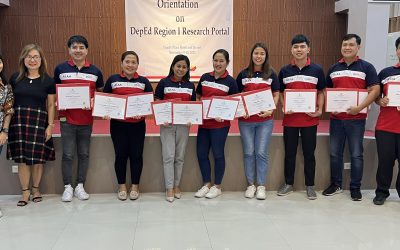
Deped RO1 Research Portal Launching
Pangasinan State University Campus orients SDO research focal and ITOs on the DepEd Region I Research Portal. The faculty of the College of Computing of Pangasinan State University-Urdaneta Campus orients the research focal and Information Technology Officers (ITOs)...
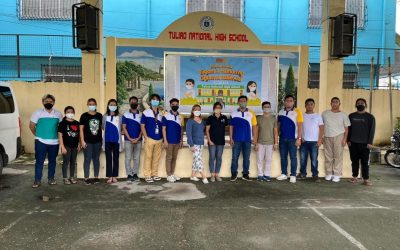
COC joins Tuliao National High School’s Brigada Eskwela 2022
Brigada Eskwela is an annual event across the public elementary and secondary schools in the Philippines spearheaded by the Department of Education to promote collaborations with the students, parents, partner institutions, and other stakeholders to contribute their...