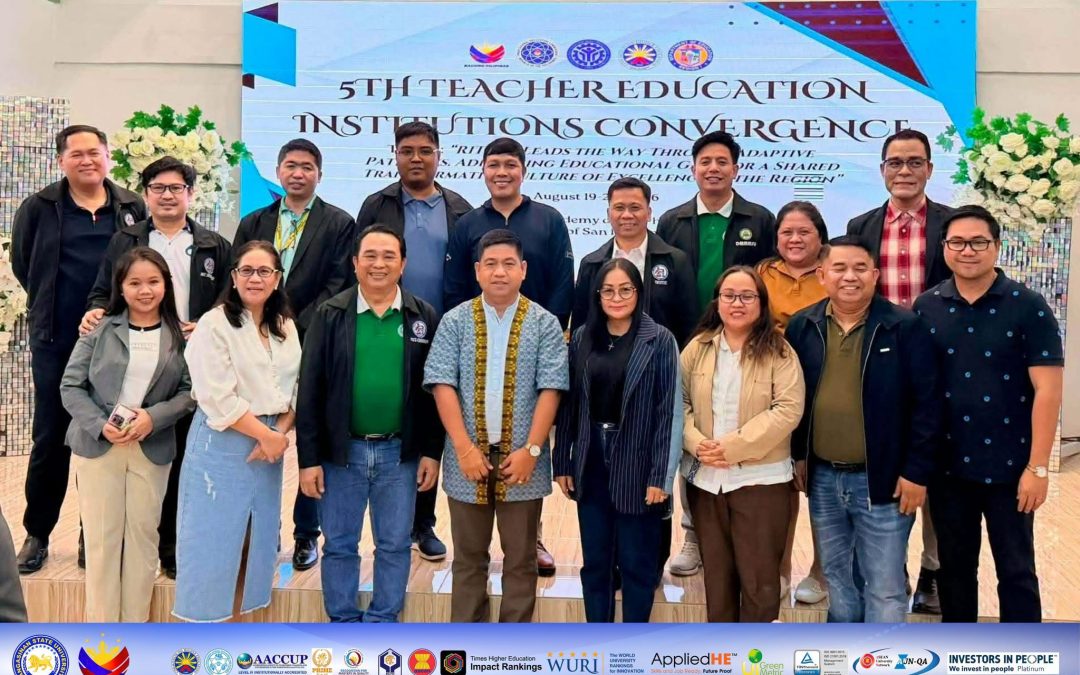
Five deans of the College of Teacher Education (CTE) of Pangasinan State University (PSU) have been elected as officers of the Regional Teacher Education Advisory Council (TEAC) for 2026-2028, marking another significant recognition of the University’s leadership and expertise in teacher education.
The election underscores the confidence placed in PSU’s academic leaders to contribute to regional initiatives aimed at strengthening teacher education, promoting professional collaboration and advancing quality and innovation in the preparation of future educators.
The elected officers are:
Secretary: Dr. Cheryl C. Mendoza (Bayambang Campus)
Treasurer: Dr. Shirley L. Milanes (San Carlos City Campus)
Business Manager: Dr. Randy F. Soriano (Lingayen Campus)
Board of Directors: Dr. Erwin Q. Estrella (Urdaneta City Campus)
Dr. Jocelyn S. De Vera (Alaminso City Campus)
The designation of five PSU CTE deans to key leadership positions in the regional body further reflects the University’s active engagement in the broader teacher education community. Their collective expertise is expected to contribute to policy discussions, academic initiatives, professional development programs and collaborative undertakings that support the continuous improvement of teacher education institutions in the region.
As academic leaders, the deans bring with them extensive experience in curriculum development, instruction, research, extension, quality assurance, and academic administration.
University President Dr. Elbert M. Galas, himself the President of Philippine Association of State Universities and Colleges (PASUC) in Region I, said the election of its five CTE deans to TEAC reinforces PSU’s commitment to academic leadership and quality assurance. It also strengthens the University’s role as a partner in shaping regional directions in teacher education and in cultivating competent, ethical, innovative and globally responsive educators.
The achievement reflects PSU’s continuing pursuit of excellence—not only through institutional accomplishments, but also through the active leadership and professional contributions of its academic community.
Five PSU CTE Deans elected as officers of regional TEAC